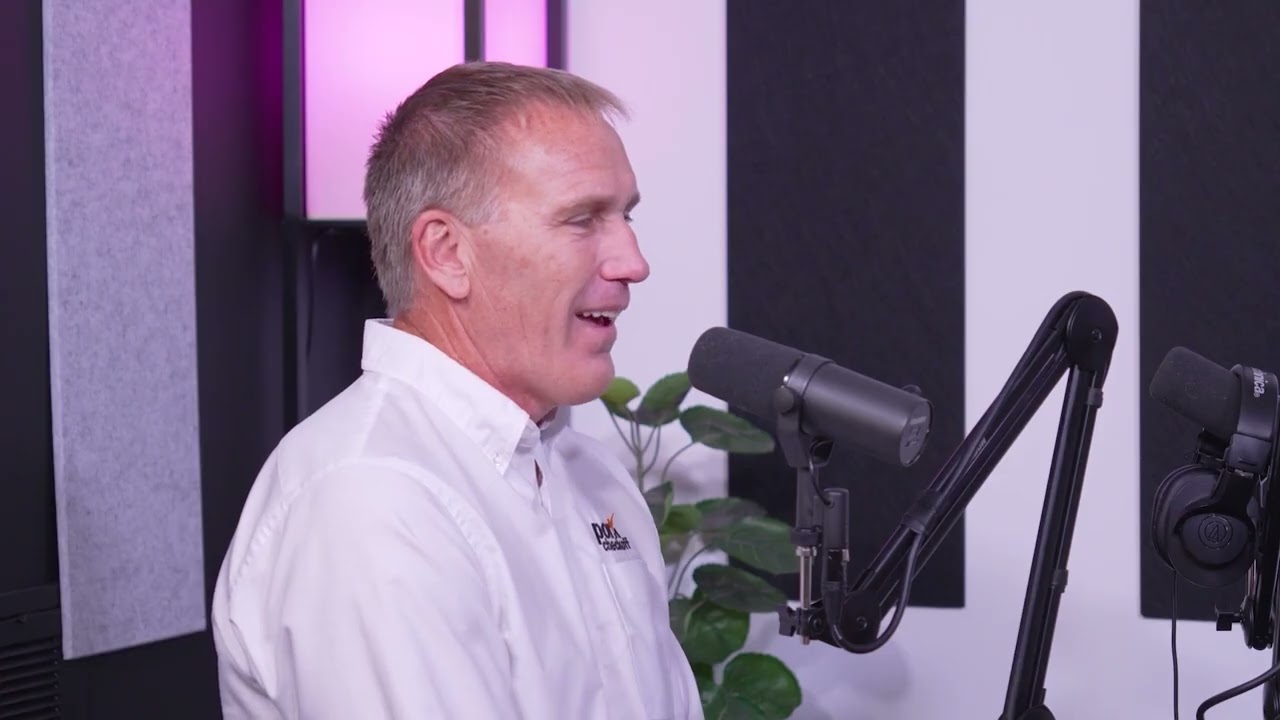
Matthew Rooda 00:00:02 Welcome to the popular pig podcast. I’m your host, Matthew Rooda, and joining us today is the immediate past president of the National Pork Board, Al Wulfekuhle. How are you doing today? I’m doing great, Matthew. Excited to have you on the podcast. This is the first time we’re doing one in person and honored to have you and to talk about your story. Before we get started, could you give us a little bit of an overview of what your life looks like today as an independent pork producer and your role within National Pork Board?
Al Wulfekuhle 00:00:26 Yeah, today I have a great group of employees that pretty much run the hog farm for me, and we’re about 48,000 pigs sold per year. as immediate past president of the National Pork Board, it’s been a very busy summer. I think a lot of people know we had to do a search committee and find ourselves a new CEO, and we’re excited to share that news, too. and then on the home front, we built a new home last year on Lake Dell High, and we moved farther from the farm and trying to enjoy a little more downtime at the end of my career.
Matthew Rooda 00:01:01 Is that what downtime looks like, being on the lake?
Al Wulfekuhle 00:01:04 it is for my wife. For me, it’s a lot of running to the farm shop and going to a lot of meetings, but it’ll slow down here in the next year.
Matthew Rooda 00:01:11 Can you give us a little bit of an update on that selection? David Newman President or CEO what was that process like?
Al Wulfekuhle 00:01:21 Yeah. So Bill even announced he was going to retire or resign from the pork board come May 1st. And he gave us about three weeks’ notice, which is a pretty short notice. So as president of the National Park Board at that time, it’s my job to put together a search committee and look for the new CEO. And so I did that, and had a great group of people. And we got together, put together a personality profile, a job description, and then we hired a national search firm to help us look for candidates. And, they came through and they previewed close to 250 candidates. Holy cow. Plus, we had three internals that we thought very highly of, and we did interviews with about a dozen of the top that came to the top, ended up with the three internals of our top threes, which says a lot about the talent in the in the passion for our employees and for the National Park board.
Al Wulfekuhle 00:02:14 And then we went through that process. We brought three of them to in-person interviews in Chicago just a few weeks ago. So the three internal candidates gave us their plan for the first hundred days, and it was pretty obvious. And it just we had one person rise to to the top through the whole process, and, and and this person really nailed it with the first hundred days just showing his passion and his, just love for the industry and his expertise and everything he’s gone through in his life. And, and we ended up choosing, Doctor David Newman, who is right now our VP of marketing, which takes care of our domestic marketing campaign and international marketing.
Al Wulfekuhle 00:03:49 And, and the other two candidates are great, and we really need them to stay with us at Pork Board to take us to the next level. But, Doctor David Newman rose to the top and he’s our new CEO as of September 1st.
Matthew Rooda 00:04:01 That seemed like such a good fit, given that the domestic demand has been such a massive topic of late, and he’s been able to drive that as of late, and it just seemed like he was in a perfect position to elevate his role and and continue that that goal.
Al Wulfekuhle 00:04:19 Yeah. Matthew, after 2023, I think it was in the January board meeting, 2023. And I asked the question to the board, is there more? We can do more for producers? And the resounding answer is we have to do more for producers. They just went through the toughest time in history of pig production, the highest cost to raise the pig we ever had and the highest per pig losses. And we produce one product, right? We produce pork. And, if we can’t sell pork.
Matthew Rooda 00:04:49 Yeah.
Matthew Rooda 00:04:50 Then what are we doing?
Al Wulfekuhle 00:04:50 Nothing else matters. Right? And so we, as the board said, we need a staff up. We need to make this our number one priority. Priority. And bringing David Newman in, was the perfect choice. And then we brought some other key talent in to help us with the campaign. And we’re off and running and it’s been an amazing journey and we have a lot more to come.
Matthew Rooda 00:05:14 So before we get, before we go way back to the beginning, I want to hit on a couple other things that you had talked about. Just because the great thing about these podcasts is you get to know people better, and you got to take some time off this summer and go to Colorado and New York. and Templeton, which that’s a really cool story. But, sounds like you’ve had experience in pioneering your own, your own whitewater raft in the past, and you did that again.
Al Wulfekuhle 00:05:43 Yeah, it’s interesting. I’m pretty adventurous, and I like to do some challenging things.
Al Wulfekuhle 00:05:51 And so I went to Colorado, with my one son. And I told my two sons that I wanted to hike one more mountain, one more 14 or before I got too old. And I’m 66. I’m not young anymore. And we got to the top of the mountain, so that was pretty amazing with Brett. And then we went to a concert at Red Rocks. Great trip, but my other son invited us on a vacation with their family. They have four kids and went to the Finger Lakes region in upstate New York. beautiful country, deep glacier lakes, a lot of waterfall hikes. But my son asked me if I’d want a whitewater raft and so, we hopped on this river and there weren’t enough guides for all the guide boats. And the guide captain asked if anybody would want to pioneer their own boat, and I said, hell yeah. And so I got a guide, my own raft down the whitewater rapids. And it was a lot of fun.
Matthew Rooda 00:06:40 Yeah, that’s pretty cool. I’ve always heard that upstate New York was beautiful. But you had also been to that Maine area, New Hampshire area. And you said this compared pretty closely to that, didn’t it?
Al Wulfekuhle 00:06:49 It did, and I had no idea. But there were like 130 wineries on the Finger Lakes, too. And my wife loves to do wine tasting and go to wineries, so we had a lot of fun. Great time.
Matthew Rooda 00:06:59 So you also had the opportunity to visit Templeton Rye. And apparently there’s this intersection between bourbon and or rye and pig production. Can you tell us what you learned there? Because this is fascinating to me as somebody who enjoys the history of bourbon.
Al Wulfekuhle 00:07:16 Matthew. Amazing story. So every year Iowa pork goes to the hometown of their president, which our president is Aaron Jergens this year. And he’s from Carroll, Iowa. And we did meetings there, visited a few industries, but then we took a night off and went to Templeton, which was very close.
Al Wulfekuhle 00:07:33 And the story of Templeton rye and pig production intersecting is pretty amazing. So during prohibition, the town of Templeton got together and they said, we’re going to continue making whiskey. This is kind of our livelihood. This is what we need to do so that the town priest, the constable, everybody was in on this and they built most of the stills. They moved them into the basement of hog barns. And then when the feds heard about this little town in Iowa, in Templeton making whiskey, they couldn’t find the stills because they were looking for the smell. Because when you distill whiskey, you know, the stills put out an odor. Pigs overwhelm that odor. They were looking for mash, and the pigs were eating the mash. They couldn’t find any of the, you know, the byproduct of making whiskey. And then in the wintertime, they were looking for buildings that had the snow melted off the roofs, because, again, stills put out heat, so do pigs. So they’d come to this town, they’d ask all the townspeople, and everybody denied that they were making whiskey.
Al Wulfekuhle 00:08:36 They drove around the countryside, they couldn’t smell any whiskey, they couldn’t find any mash. And it’s just an amazing story. And a lot of the wealthy pig farm owners, landowners in Carroll County today are ancestors of the people that were making whiskey back in prohibition because they had money to buy land when nobody else did so. What an amazing story. Whiskey and pigs.
Matthew Rooda 00:08:57 It’s super cool. And then the stuff that that distillery Templeton Distilled does today for that community and some of the unique releases they have. It’s just a really cool business. All in all.
Matthew Rooda 00:09:08 Yes it is. Yes it is.
Matthew Rooda 00:09:10 So speaking of business history, can you take us to the very beginning of your family farm or how that got started? Did you always want to be a big production? What was it like as a kid? Did you grow up around a farm?
Al Wulfekuhle 00:09:24 Yes, I grew up on a small 140 acre farm. I think my dad had 90 sows. Farrow. To finish the very first pig I owned.
Al Wulfekuhle 00:09:33 It’s an interesting story. It was a great Jones County fair, and they had a greased pig contest. So they turned these teenage boys out into the show ring, and they had a couple of barrels out there, and they grease up these feeder pigs, like, 40, £50 pigs. And if you can catch a grease pig and get it up on the barrel, you get to keep it. And so I did it and ended up taking that pig home. I grew it up. It was a gilt. It was a female. So I bred it. And that’s my entry in pig production.
Matthew Rooda 00:10:04 Oh my.
Matthew Rooda 00:10:05 Goodness.
Al Wulfekuhle 00:10:05 That was the first pig I ever owned.
Matthew Rooda 00:10:07 What, what genetic pig was it?
Al Wulfekuhle 00:10:09 it was a white pig, and I don’t even know.
Matthew Rooda 00:10:11 Okay, well, I know it was.
Al Wulfekuhle 00:10:13 White at that time. It was just a pig.
Matthew Rooda 00:10:15 And so how did things progress from there? You bred the first. So. But did you know that’s what you wanted to be doing? When was that moment of.
Matthew Rooda 00:10:23 I think I’m going to make this my life’s career and passion?
Al Wulfekuhle 00:10:26 Oh, that moment was my, before my senior year because I always worked for my dad, and he was a small pig farmer, and we had outside lots, and my job was pretty much scooping manure and scraping hog floors, and I really didn’t care for it. And then I worked for this large farmer, and he had nice equipment. He had a farm shop, he waxes tractors. I mean, he had really nice hog facilities. And I thought, man, I want to be like him someday. And that was really my turning point up until then, up until I worked for this neighboring farmer, I didn’t have.
Matthew Rooda 00:10:57 Much of a desire.
Matthew Rooda 00:10:58 Yeah, I grew up in it my whole life and similar situations were walking finishers, managing nurseries, power washing, selling hogs. But it was a means to an end. It was the paycheck, something that paid well that I knew how to do. But there wasn’t a lot of passion behind it.
Matthew Rooda 00:11:15 This is going to be what I’m doing for the rest of my life. And then when I went to college and had the opportunity to work for Schneider Pork Farms near Waterloo and due to some significant turnover, had a lot of responsibility and got to really learn a lot from Doctor Schneider. It it made me look at things through a different lens, through the system as a whole, not just the job itself or the task itself. And then as I became more aware of everything that the industry is doing collaboratively with one another to try to improve the overall product, the overall industry, the pig. I definitely got my passion at that point. But it’s funny how as a kid you grow up into it. A lot of people will say, you know, as a kid, I always, always knew I wanted to do this, but that was never the case until I got to see the bigger picture.
Al Wulfekuhle 00:12:03 Yeah, it really wasn’t with me either, until I saw what the opportunity was out there.
Al Wulfekuhle 00:12:07 And I’m like, yeah, this is what I want to do.
Matthew Rooda 00:12:09 So what was that next step you took when you knew this is what I wanted to do? Because one saw with the litter, that’s not enough, right?
Al Wulfekuhle 00:12:16 Right. So I think the next step was, my current wife, Cathy. Yeah, she was my high school sweetheart. Right. So I had to convince her to move to a farm that I had found 32 miles away. And my dad helped me get this farm, and we started, I was 19. She was 20. We got married, we moved, down the road, and we started our own hog operation separate from my dad’s. And, that was. Yeah, my start. Small operation there to start with two. And it was pretty much a rundown hog farm, but, sometimes that was the best of times.
Matthew Rooda 00:12:54 So what year was that? And how many sow hogs did you start with?
Al Wulfekuhle 00:12:58 Yeah, that was 1979 and my dad gave me half of the gilts.
Al Wulfekuhle 00:13:03 So I had 90 gilts to start with, and he gave me 45 of them as a wedding present. And, we just started from there. I think I sold 1300 pigs my first year.
Matthew Rooda 00:13:12 So what did your wife originally want to do? Was this something she always did? She always knew she wanted to be a farmer’s wife or own a farm someday. Or did she want to do something else? And what was that conversation like?
Al Wulfekuhle 00:13:24 Yeah. So the first year out of high school, I worked for my dad and she went to X-ray tech school, and she made the sacrifice to come farm with me. And, she’s been my partner and my biggest fan and biggest critic ever since.
Matthew Rooda 00:13:41 That’s awesome.
Al Wulfekuhle 00:13:42 Yep.
Matthew Rooda 00:13:42 So what? How did the operations grow? Throughout the 80s and the 90s? And how did that all time itself with some of the really trialling periods in that era? Yeah.
Al Wulfekuhle 00:13:54 Great question. So started out, you know, young and enthusiastic and all you thought you had to do was work hard and you were going to, you know, do very well in life.
Al Wulfekuhle 00:14:03 And we bought a farm of about 180 acres with a beginning farmer loan, in 1980. So I was 20 years old and I bought a 180 acre farm with help from a USDA loan program. By 1986, that farm was worth half of what I paid for it. And my net worth was below zero. And I remember sitting on a fence, we just had pigs and open lots at that time. We just loaded them and it was always Kathy and me loading pigs. And, I remember breaking down and saying, Kathy, you want me to do something else? I’ll do it because we’re struggling. We’re having kids, we’re starting a family. And you know, our net worth is below zero. And things didn’t look very good at that time.
Matthew Rooda 00:14:48 After, you know, it had to be terrifying.
Al Wulfekuhle 00:14:49 Yeah. And she said, no, this is your passion. We’ll make it.
Matthew Rooda 00:14:54 And you did.
Al Wulfekuhle 00:14:54 Yeah, but it was tough. It was.
Matthew Rooda 00:14:56 Tough.
Al Wulfekuhle 00:14:57 But then things turned around and then a lot of opportunities came and we took them and went from there.
Matthew Rooda 00:15:03 So following that, following 86, it very quickly would have turned into the wave of, the new model of production was that that next opportunity that came along, that how did how did your path align with that change? And what were some of those immediate opportunities or patiently waited for opportunities that came after 86 that made you move in the right direction?
Al Wulfekuhle 00:15:30 So being in the situation I was to expand it was renting cattle lots from neighbors. It was renting hog buildings from neighbors going up and down the road with the 4020 with a heat houser and a mixer mill, and we used a lot of corn stock bales and and then in 1994, I thought, I’m ready. I’m going to build a confinement barn. So I had a 1200 head barn and I went to three bankers. and they all said, no, you don’t have enough equity for us to lend you the money. And, it was tough. You know, I thought I was ready, and because of my net worth not being there, they said no.
Al Wulfekuhle 00:16:11 My veterinarian at the time, Dr. Don Boden, said, “I’m going to take you to my banker, and I’m going to tell him to give you a loan.” And that’s what he did. He took me to the bank in independence, Iowa, which I didn’t bank at because my bank turned me down. And, we went to the upstairs office of the bank president, and he sat down and he said, “you need to give this guy a loan.” And he did. And it was, again, he worked with FSA in the beginning farmer loan program. But that bank took a risk on me because of what a veterinarian asked him to do as a friend and a business partner. So a pretty cool story.
Matthew Rooda 00:16:50 That it’s wild how good of an example that is of just the way you treat people, your relationships. Yeah, it doesn’t always just come down to numbers and logic.
Al Wulfekuhle 00:16:59 It doesn’t. It’s emotional. It’s about surrounding yourself with good people and they’ll help you out. You’d be good at them and they’ll help you.
Matthew Rooda 00:17:06 That’s so cool. And so you got the loan? Yep. You built the barn. And how big was it again?
Al Wulfekuhle 00:17:11 It was 1200.
Matthew Rooda 00:17:12 Head. 1200 head. Had you visited a confinement site prior to applying for the loan or.
Al Wulfekuhle 00:17:18 I had, and it was interesting at the time, when I started, Doctor Al Lehman, was going around doing, I call him roadshows where he, he’d put on meetings and I was like his disciple, man, I read everything I could about him. And I went to like three meetings in a row, and he’s like, you’re like a groupie. You follow me around and and and then all of a sudden, he’s gone, right? Yeah, yeah. And tragic how he lost him, but, yeah, I would call him one of my inspirations. And the reason I got into modern hog production, I guess he would call it.
Matthew Rooda 00:17:55 What were some things that he did that really stuck out to you as you remember him? And what is a fond memory you might have? I never had the honor of getting to meet him.
Al Wulfekuhle 00:18:04 Oh, he just made it sound easy. and one thing he said, and we still struggle with as an industry to this day, is you have to have pigs there when the markets are good and they’re good every summer. And that’s when we sell the least amount of pork every summer, because every winter, we struggle with disease and we struggle with getting things bred, in the heat of the summer. And that’s the pigs that are sold next summer. And then every summer, pigs slow down. They don’t eat as much when it’s hot. And, so I remember him saying that. And then just the example of you’ve got to have pigs to sell when the prices are really good. And, to try to remember that in marketing to that, you can’t miss the good times. I think that was probably the biggest and just the inspiration that there’s a future in this industry. Yeah.
Matthew Rooda 00:18:57 So then you moved to the late 90s, and that wasn’t easy either. but it sounds like you might have had 4 or 5 years or four years headed into that, which probably helped a decent amount.
Matthew Rooda 00:19:09 How did things change for you and your family and your business as you went through the 90s and into the early 2000?
Al Wulfekuhle 00:19:16 So this same veterinarian that helped me get the hog loan in 1997, he came to me and said, I’m managing a large salad farm that’s struggling to get pigs bred. It’s getting south bred, getting pigs on the ground. Can you help me with that? And first I said, “no, I’m too busy, doc, I can’t do this.” And then he asked again and I said, “Okay, I’ll take a day off. I’ll go through. I’ll look at everything they’re doing. I’ll talk to the employees, and I’ll write up a report and I’ll bring it to the board meeting, the owners meeting.” And so I did that, went with Doc Bowden and went to this meeting. And I didn’t know they were in financial problems. There were six bankers in the room when I gave my report. Oh, wow. And by the next day, they had hired me and Doc Bowden to contract manage the South Arm.
Al Wulfekuhle 00:20:00 And that’s how I got into contract management of the.
Matthew Rooda 00:20:04 Plan for that. Yeah.
Al Wulfekuhle 00:20:06 Yeah. And so it was, the start of a really tough time for a big part of the industry. It was somewhat of an opportunity for me. Yeah. And then in 1999, one of the South farms I was managing came to me and said, why don’t you just buy this from me? There’s like five owners in that South farm. And I said, well, I can’t afford to do that myself, but I can ask some friends in the industry. Maybe I can put a group together and do that. And that’s when we bought a farm and renamed it New Horizons Park. And we grew that farm from a 900 zero feeder pig to 2400. So I was able to finish by the time I was ready to sell my shares in it. And I did that in 2014. So that was a fun experience. But again, some of the toughest times are when you have the most opportunities.
Al Wulfekuhle 00:21:02 And that’s what 98 turned into me. I survived it and I had some great opportunities to move forward.
Matthew Rooda 00:21:09 So 14 that was PED year. Was there any of that? Did that have anything to do with the 14 getting out? Yeah, I can imagine.
Al Wulfekuhle 00:21:20 So growing this all farm, managing other South Farms at the same time. I think we’re doing like six different South farms kind of spread out over parts of Iowa. It was getting very stressful. And 2014 profits are really good, and I went to my partners in New Horizons and said, I want to slow down. I want to de-stress a little bit. Why don’t you buy out my share? And they did. And that’s about the time I got involved with Iowa Pork. I wanted to start giving back to the industry because the industry had been good to me when.
Matthew Rooda 00:21:50 So before we hop into Iowa pork, from the time that you started with your wife to that moment, what were a couple of your proudest moments through those, those decades.
Al Wulfekuhle 00:22:07 Proudest moments, through those decades? I think being able to bring producers together, I think I look back and I love fixing problems. I love helping people. It’s always been part of my DNA. And overseeing other South Farms allowed me to do that, but then also to put groups together like New Horizons and some other Deals that I got into. I started working with a farm on my own operation. He wanted to get out of the hog operation, and they had a small feed mill on it. And, we’re still using that feed mill today. It looks a lot different than it does. And we’re still using that farm style to sell farms today. We ended up buying it all from him. But, just those relationships you build and, Yeah, the great people you get to work with in this industry, that’s probably one of the best things.
Matthew Rooda 00:23:03 When you raise a whole you raise an entire family.
Al Wulfekuhle 00:23:05 Exactly.
Matthew Rooda 00:23:06 That time frame.
Al Wulfekuhle 00:23:07 Yeah, exactly. So it’s pretty stressful. I look back and my wife’s going to be a saint someday, but I look back and think, man, I wish I could spend a little more time with my family because I was so driven.
Al Wulfekuhle 00:23:18 Yeah, but man, Matthew, my kids have turned out so great. Yeah, they’re all highly successful. They have their own careers, they’re married. I’ve got nine grandkids from 3 to 17 years old. yeah, that’s quite accomplished right there.
Matthew Rooda 00:23:32 Yeah, we’re expecting our first in January.
Al Wulfekuhle 00:23:35 Congratulations.
Matthew Rooda 00:23:35 Exciting. Thank you. And you talk to people who have done well in life. And their kids are doing well as well. And that’s always a seemingly battle of spending more time. But then the kids, as they get older, they really point to the hard work, the good work ethic, the, just the example that their parents have set for them and how that was so meaningful and helpful for them as they grew older. And, that’s got to be hard figuring out how to be a good example. But then also to be able to spend that time. And it sounds like you did good with both, but yeah, it’s got to be hard to not want more of one or the other at points in time.
Al Wulfekuhle 00:24:15 Right. And our three kids all work side by side with us growing up. Right. It’s just almost expected that they’re going to help out on the farm. And I remember because I had asked my kids many times, do you want the opportunity to farm with me? And they pretty much all said the same thing, Matthew. They said, hey dad, thanks for the work ethic, but I think we’ll do our own thing.
Matthew Rooda 00:24:37 So yeah, I think that’s I think that’s a blessing that people who grew up on a farm get to have that we just have far less of today. And that’s that ability to have worked. Elbow to elbow, shoulder to shoulder with your dad, your grandpa, your mom, your grandma and my grandpa. My grandparents, one set, had a residential real estate business. The other set had 200 Sal Ferro to finish the operation. And so I got to do those things. But you just don’t see it much anymore. And that is such. There’s such amazing memories on the farm being able to ride in the tractor or go and process pigs.
Matthew Rooda 00:25:16 And even when the job sucked, you got to do it with your grandpa or with your dad and it’s so meaningful.
Al Wulfekuhle 00:25:22 It’s funny, you call it a blessing, Matthew, because, my, my oldest, my daughter, she has her own business and she just works her tail off and puts tons of hours in and nights and weekends, and she calls it the Wolf Kool Curse. She doesn’t call it a blessing. It’s like she can’t sit still and she’s gotta always be working. And she calls it a curse. So it’s funny, you call it a blessing.
Matthew Rooda 00:25:45 Yeah. My wife and I were watching football yesterday. The NFL was on, and I had been fairly productive, but I was like, man, I feel like I’ve been lazy today. And she’s like, that’s a problem you need to work, work on because I’m the same way. I have a really hard time sitting still. Yeah. and it just feels like the older you get, the more you can do. And it just doesn’t ever slow down.
Matthew Rooda 00:26:07 Yeah, but it’s fun.
Al Wulfekuhle 00:26:08 Yes.
Matthew Rooda 00:26:09 A lot of fun. So let’s talk about Iowa pork. You joined that in 2014 or was it 15? It’s 2014, right?
Al Wulfekuhle 00:26:15 I joined that in about, 2013.
Matthew Rooda 00:26:19 Okay.
Al Wulfekuhle 00:26:20 Yes. And then, was president in 2016. Okay. And it was kind of ironic because I was president the year that Pat McGonigle became our CEO. Right. And so the two of us got to figure things out together a little bit. Rich Stegner, our past CEO or president or CEO of National or of Iowa pork. Rich Stegner, our CEO of Iowa Pork, had just retired, but we kept him on retainer. So there would be times Pat McGonigle and I would say, I think, I wonder if we’re doing this right. So we’d call Rich, and Rich would be very diplomatic and say, no, you’re not quite doing that. Right. But we’d figured it out. We figured it out together. And I have a really good relationship with Pat McGonigle.
Al Wulfekuhle 00:27:04 yeah, he’s a great guy, and he’s been really good for Iowa pork producers.
Matthew Rooda 00:27:07 What were some of the problems that you, you kind of walked into as you decided to get more involved? What was Iowa pork focused on in ‘13, ‘14, ‘15?
Al Wulfekuhle 00:27:19 Iowa pork. It’s a little different than National Pork Board because National Pork Board is research, education and promotion, and the National Pork Council does the public policy, you know, the regulations, the trade deals, and the lobbying. So Iowa pork does both. Right. And I think you’ll find a lot of these state organizations and we have 42 of them, 42 different state organizations underneath National Park Board. But a lot of them in Iowa’s part, probably one of them that emphasizes a little bit more of the public policy side than the research, education, promotion. They do both. But when you get at the state level, they’re dealing with, you know, pushing back on regulations and siting new hog barns. And we have activist friends that are always attacking our industry, and we feel the need to defend ourselves and our right to operate.
Al Wulfekuhle 00:28:14 And so that’s always, always going on in Iowa. And Iowa does a really good job with that. Friends with the legislature, the lobbying part, just having an ear to the ground if anybody’s having trouble with any activist anywhere, we make sure we get into the communities and show all the good things that we’re doing. So, it’s more grassroots, where National Park Board is more the whole nation. We have to cover everybody.
Matthew Rooda 00:28:39 Fair. And so what made you want to become president and give that a shot? And then beyond that, what inspired you to move on to the National Pork Board.
Al Wulfekuhle 00:28:55 Becoming president of Iowa Pork? I think it’s almost expected. When I got on the leadership team I moved up fairly fast because we had somebody on the leadership team that declined to move up to become president. And we had another person that changed careers midstream and dropped off the leadership. and then all of a sudden, I’m like, next in line, right? Yeah. And so, no, it all worked out good.
Al Wulfekuhle 00:29:22 And, you know, we’re all here to try to make a difference. And I came on board not because I wanted something to do when I was bored. I came on because I really wanted to make a difference. Yeah. And that’s what I’ve really tried hard to do in all these years that have been involved is to make a positive difference.
Matthew Rooda 00:29:37 What were the things while you served as president that you’re most proud of the most, the greatest accomplishments that you can look back on? But then also, what were some of the bigger challenges that maybe surprised you?
Al Wulfekuhle 00:29:49 Yes. some of the greatest accomplishments. I was on the advisory board for the veterinarian diagnostic lab and vet college.
Matthew Rooda 00:30:02 Oh, that got off the radar.
Al Wulfekuhle 00:30:03 And to Roger, Maine and, doctor Pat Halbert. And being part of getting the new diagnostic lab pushed through and to see that building. I don’t know if you’ve ever been through it, but it’s impressive. It’s an amazing building. And it’s great for the whole hog industry.
Al Wulfekuhle 00:30:22 We do more lab submissions at Iowa State Lab than any other lab in the country, and.
Matthew Rooda 00:30:28 It’s just not that lab anymore, right? They just did an extension or an expansion here recently, didn’t they?
Al Wulfekuhle 00:30:34 I think they’re growing the lab and bringing it all up to current standards. And so they’re slowly moving it out of the old lab into this one. And the, the.
Matthew Rooda 00:30:45 It’s exciting.
Al Wulfekuhle 00:30:46 Now to get the last of it moved over there. Yeah. But with technology, they have the ability to do research. It’s an interesting story during Covid. They helped Iowa’s labs, the University of Iowa do Covid testing because we at the diagnostic lab in Ames are set up for high speed testing. And, the University of Iowa’s lab was not. And so Roger Maine went over there, brought equipment and showed them how to do testing fast. And, and, it was it was an interesting story that it took an animal diagnostic lab to show a human diagnostic lab how to do things.
Matthew Rooda 00:31:26 I think that was fascinating. During the whole Covid situation, how much more prepared animal agriculture was to handle some of the issues than human health, just because of what animal health is regularly dealing with on a daily basis?
Al Wulfekuhle 00:31:43 Yeah, absolutely. So that was pretty good. But yeah, it’s a huge accomplishment. Accomplishment. And it makes me feel really good to be part of getting that diagnostic lab. And what I did was a very small part. But what the Iowa pork did and being the first to put down the first million and and I got to be there when we broke the first ground with the golden shovel, I got to scoop my little shovel of dirt. So it felt really good to be part of that. Yeah, that was one of the main accomplishments. I think that felt good.
Matthew Rooda 00:32:12 And then you transitioned. So did you transition off of Iowa pork and then have a gap between national pork or what was that transition to National Park Board.
Al Wulfekuhle 00:32:22 It was a few years between the two of them.
Al Wulfekuhle 00:32:26 I was still involved with National Park Board. I was on the animal science Committee at that time, and so I knew a lot of the people there and a lot of what I’d done on the Animal Hill side and in the foreign animal disease preparedness was working with National Park Board. So I knew a lot of the people going in, and it was just a matter of waiting my turn. We had somebody that had been president before me that was wanting to run, and so it was just waiting my turn. But I always knew I wanted to move on. I thought I could do more on a national level, and people were encouraging me. So, it was just a natural transition for me to go from Iowa to National.
Matthew Rooda 00:33:02 So talk us through that transition into national then, and some of the things that you’ve been focused on here today.
Al Wulfekuhle 00:33:09 So when I first came on National Park Board, I was all about animal health and animal production. That was my background. Right? I ran a Records bureau, Several.
Al Wulfekuhle 00:33:20 I managed other small farms. I had my own farm, and I had been on numerous committees and task forces for animal health, and I’ve been on the Diagnostic Lab advisory board. And so that’s where my focus was. And I came off, I was chairman of the National Swine Disease Council, and so I knew a lot of people in the industry there. So when ASF was going rampant over China, we started a task force to help the US prepare for it and hopefully keep it out of this country. And when I got a national pork board, we did a tour of Europe to see how different countries were handling it. How were they trying to slow the spread or eliminate it? I learned a lot from that, and that was a huge part of my emphasis when I first got on. I also got involved with AGU as being the records bureau for other farms. I knew what it took to get producers to put records into a records bureau, and saw the dire need that this industry has for pig traceability, and we have to be able to find disease quickly if it does get into this country.
Al Wulfekuhle 00:34:37 And then we have to trace where it came from and where it went, so we can stamp it out quickly and hopefully save the industry.
Matthew Rooda 00:34:43 And so that was probably pretty apparent when you visited Europe, because they have a ton of traceability systems from country to country. And the whole passport system. Was that pretty evident when you visited there?
Al Wulfekuhle 00:34:55 Yes. And the sharing of information too is more prevalent in Europe than it is in the US. And to convince producers that, hey, we got to work together if we’re going to eliminate disease and we need traceability if we’re going to do that. So that was a big success story. I think on my part, as I was able to be part of the development of ag view, which works great, and I’d encourage every producer in the country to utilize it. But we know it works. We have a large portion of the industry utilizing it now, and it’s ready in time of crisis. And let’s hope we never have the time of crisis, but we know we’re ready.
Matthew Rooda 00:35:30 It is pretty cool to have that in place in case there is a crisis.
Al Wulfekuhle 00:35:33 Yeah, and we’re so much more prepared for foreign animal disease. We’re doing so much testing of feral pigs down in the South because we know that that’s a risk. We’re doing lab submissions at all the major labs, just randomly testing anything that looks like it could be African swine fever. We’re pretty confident that we’ll find it quickly if it does get in the US. And then it’s all about finding it, tracing it and stamping it out.
Matthew Rooda 00:35:58 Yeah, let’s hope that never happens. Yeah.
Al Wulfekuhle 00:36:00 Yeah. Knock on wood.
Matthew Rooda 00:36:01 So when you join National Pork Board for an animal disease, I remember people were even getting ASF fatigue because it was just everywhere in conversation. And then a couple of years ago, everything kind of shifted into. All right. But we’ve got a significant demand issue that we gotta keep our head around here. Can you talk about what that shift was kind of, how it took place, and what that’s grown into, because it seemed like the National Pork Board was very prepared for this shift in focus as they were wrapping up some of the key initiatives on the foreign animal disease side.
Al Wulfekuhle 00:36:47 I don’t know if we were prepared or not. Matthew, I think it came down to we had grass roots telling us, hey, you need to help us. You got to be able to do more. And then we had done a really good job at National Pork Board. We have a gal there, Kirsten Hafer, that just did an amazing job with insights and data. So we understood our consumer better than we ever have. We understood who buys pork, why they buy pork, different ethnicities, how they buy pork, different parts of the country. and then the demographics, the younger generation versus the older generation, that was the scary part was the younger generation is not buying pork like us baby boomers are. And, if we don’t fix that, we don’t have a future, right? As we age out and more young people come into this, we’ve got to be able to win that younger generation over. And we thought, and I think the staff at National Park Board, that we’re just going to take this information and hand it to retailers and to packers and processors and, and they were going to utilize it and run with it and, and grow demand.
Al Wulfekuhle 00:37:58 And we found out pretty quickly that, hey, we’re the ones that are passionate about this industry. We’re the ones that really want to make a difference. And we’ve got to do this ourselves. And that’s what was the start of this domestic marketing campaign.
Matthew Rooda 00:38:12 Yeah. Grab it by the reins and drive it.
Al Wulfekuhle 00:38:13 Taste what pork can do. Yeah.
Matthew Rooda 00:38:15 Which is awesome. That was unveiled in May. Yes. And you guys have had some meetings. You’re not ready to share all the information yet, but it sounds like things are going rather well.
Al Wulfekuhle 00:38:25 Yeah, I think we did it right when we brought David Newman on board, and he brought some other key employees. We brought back Patrick Fleming, who was with Pork Board when they did their last marketing campaign. We had to bring some amazing people in. And then the people that we had also and the first thing they did is they rallied everybody in the industry behind this. They knew they couldn’t do this alone, that they needed the retailers, the processors, everybody involved is we’re really going to make a difference here.
Al Wulfekuhle 00:39:00 And they spent a year doing that and then working with a national marketing group to plan how they’re going to roll it out and looking at the data and the insights and already knowing going in where we get the most return on investment of producers dollars, and I think that’s something we have to always remind ourselves of. At National Pork Board, we’re spending producer dollars and they expect a return. And, when I first got on the pork board, I questioned a little bit if we were getting a good return on everything we’re doing. But I feel really good right now. I think we’re really paying huge dividends for what we’re doing with producers’ dollars.
Matthew Rooda 00:39:37 You’re absolutely addressing something that, for those who haven’t become more familiar with the process of preparing for a campaign, running a campaign, maintaining a campaign, this is not something any producer could just simply do by themselves without a team.
Al Wulfekuhle 00:39:54 Absolutely.
Matthew Rooda 00:39:55 It’s hard.
Al Wulfekuhle 00:39:55 Yeah. And you look at who they are competing against and the dollars that they have. We had to rally the entire industry and that’s what feels so good.
Al Wulfekuhle 00:40:04 So just a week ago, we were in Kansas City. We hired the Berkeley Group to do our domestic marketing campaign, and they showed us the initial results, and I’ve been asked not to share them right now because it’s early and we don’t want to take too much credit for what’s going on right now, but they’re killing it. And if you look at what’s happening with prices, the lean index of hogs right now is the highest it’s been in ten years. The demand for pork is pretty amazing right now. I think we can start taking a little bit of credit for it, Matthew.
Matthew Rooda 00:40:39 But are you starting to see a real. Because I mean, it’s happening with generations. Are you starting to see a real tick back in the right direction, at least from some of the data? Yes. That’s exciting.
Al Wulfekuhle 00:40:49 And what’s really exciting is, we have all the big names on board. Walmart, Kroger. Most of the brands are on board with this too. And the reason they are is because we’ve shown them how they can make more money with pork than they can with the competing proteins right now.
Al Wulfekuhle 00:41:09 And we all know how expensive beef is. And so if there is ever a time in this industry to take a little more of the protein demand away from some other meats, it is now. And I think that’s a big part of why we’re getting such a huge response, because the timing is just perfect.
Matthew Rooda 00:41:27 It’s really cool, too. When you walk into a Hy-Vee in Des Moines, it’s not necessarily the same as walking to a Hy-Vee in North Liberty. For whatever reason, the meat case isn’t the same everywhere yet. But to walk in and see ground pork actually in the meat case, and then to even see chops that are like a premium grade, extra marbling and color, just the, the choice, the selection potential that’s there. And I bought them, I bought both and it was really fun to try them out. It’s going to be really exciting to see that level of improvement across all meat cases in general. And it seems like it’s starting to really make a good step in that direction.
Al Wulfekuhle 00:42:07 Yeah, and that’s a big emphasis behind What tastes what pork can do is consumers know bacon. They know they know sausage. They know pepperoni. They know ham. You know, they know barbecue ribs. But we want to show them what else pork can do, right? Yeah. Yeah, especially the ground pork and different ways to prepare it, different recipes. And it can do so much more if, Yeah, if we get the word out there.
Matthew Rooda 00:42:30 Yeah. I need HyVee to bring back the jalapeno bacon. Yeah. I don’t know if you tried that, but they took that away like, five years ago. That was the best. Yeah.
Al Wulfekuhle 00:42:39 Everybody loves bacon.
Matthew Rooda 00:42:41 So when you think about where the pork board is going and where the pork industry is going in general, we just came off of some really difficult times. Obvious concern around some demand. But that’s turning in the other direction. What is your 5 to 10 year outlook and what gets you the most excited about what this industry could look like?
Al Wulfekuhle 00:43:02 The opportunity to create more demand? I’m just convinced that now’s the time and that we can do this.
Al Wulfekuhle 00:43:08 And you look at parks the number one protein in the world. And, it can be in the United States, too, again. Yeah. I just think we we need to do a better job with, celebrating what we can do and, showing the consumer what port can do. So I’m excited about the future of the industry. There’s concerns also. We always have our activist friends. There’s always going to be people that don’t think we should harvest animals for human consumption. And, I don’t think that will ever change, but, I think if you get consumers to love your product, they’re going to be your biggest supporters of what you do.
Matthew Rooda 00:43:48 I think, I mean, one thing that has definitely been talked about around the demand campaign is, from a taste and a flavor standpoint is when you look at beef, beef is beef. It tastes like beef. Chicken tastes like chicken, turkey, turkey. But pork has a wide variety of flavors, from bacon to ham to chops to ribs to the pork shoulder.
Matthew Rooda 00:44:10 And I love how we’re encouraging people to keep trying because somebody might say, oh, I don’t like pork. All right. What’s your favorite tailgating food? Oh a brat. It’s like, well that’s pork.
Al Wulfekuhle 00:44:22 Yeah. They don’t know.
Matthew Rooda 00:44:23 They don’t know because there’s so much variety reminding them that that variety exists. And it’s okay not to like a brat, but to love a rib and get them to not just write off the entire genre because of one flavor they don’t like, when there’s dozens more that they might just fall in love with.
Al Wulfekuhle 00:44:43 It’s amazing. We hired a research company to tell us how many flavors there were in pork, and they came up with over 100 and wild. Yeah, I have no idea how they came up with that number, but I think it was like 111 different flavor nuances in pork. It’s just amazing. So it depends a lot on what, what I cut your eating and how you prepared, and you can get a lot of flavor out of it.
Matthew Rooda 00:45:10 Absolutely. Yeah. So, to wrap things up, I got some rapid fire questions for you. oh. Yeah. First one is, what’s that item on your bucket list towards the very tippy top that you’re just urging to check off? I know climbing the mountain was one, and you’ve gotten that one taken care of. What’s the next one?
Al Wulfekuhle 00:45:29 That’s a great question. I think for Kathy and me, it’s for when we’re. I’m finally done with the pork board, and I have some free time to travel with her and not do pork board traveling business. I want to take her along and put her in first class and go to New Zealand and Australia. I think she’ll really like that. That’s kind of one of my one of my bucket list things I want to do.
Matthew Rooda 00:45:50 That’s pretty.
Al Wulfekuhle 00:45:51 Cool. Yeah.
Matthew Rooda 00:45:52 The, Yeah, that’s a long flight. Yes. Yeah. We have pig flow in Australia. And so I went there in ‘22, and I’m headed there in a few months.
Matthew Rooda 00:46:00 And it’s a really cool country And it’s funny because there’s some maps out there that try to take the culture of U.S. states and put them throughout Australia and that Brisbane area they labeled as North Carolina, like California. Yeah. And it is the weirdest, coolest vibe of eastern North Carolina mixed with like Surfer California. It’s a very different feel. And I’ve never done New Zealand, but I hear nothing but amazing things.
Al Wulfekuhle 00:46:30 Yeah, yeah, I’ve been all over the world with the National Pork Board in Iowa Pork Board, and I’ve been to China a couple of times. I’ve been to Japan and Vietnam and Central America, South America, Canada, you know, all over the place. And I just want to experience a little more of that with Kathy and absolutely a little less with my buddies on pork board.
Matthew Rooda 00:46:49 Yeah. The amount of times I go somewhere for the swine industry. And I think to myself, oh, I can’t wait to take my wife here someday. I’m assuming you had that exact same feeling.
Matthew Rooda 00:46:58 So many places, I do.
Al Wulfekuhle 00:46:59 Yes.
Matthew Rooda 00:47:00 It’s less stressful because now you know exactly what to do when you get there, too?
Al Wulfekuhle 00:47:03 Yeah, I hope so. Yeah.
Matthew Rooda 00:47:05 What’s your favorite cut of pork?
Al Wulfekuhle 00:47:07 I like the oh, man. Like, you can just get it a quick star. It’s like bacon wrapped pork tenderloin. Yeah, yeah. And it’s God. Sometimes they’ll sell that for a buck 99. It’s just it’s.
Matthew Rooda 00:47:19 I have not tried that. There. Is it? Is it good?
Al Wulfekuhle 00:47:21 It is really good. But yeah. The pork tenderloin. Yeah. Yeah, that is my favorite cut.
Matthew Rooda 00:47:27 If you could go back in time and have dinner with any historical figure, who would it be?
Al Wulfekuhle 00:47:33 Oh my gosh. Oh my gosh. I think I go all the way back to Jesus and say, hey, this religion thing, what’s real? And you know, what’s the myth? You know, I really want to know what really is real and, Yeah.
Al Wulfekuhle 00:47:49 How should I live my life better?
Matthew Rooda 00:47:51 That would be fascinating, because when you look at when he did come and he took Jewish law, and he sat down with the Sadducees and Pharisees and he separated the two. This is what’s been man made and this is what has been divinely inspired, right? To be able to take what we have today and ask that same question. Yeah, that would be very fast.
Al Wulfekuhle 00:48:10 You’re on the same track I am. Yeah. I want to know what’s real and what’s man made. Yeah.
Matthew Rooda 00:48:16 If you could. So for that, would you go back and see him in his time or would you pull him forward to our time?
Al Wulfekuhle 00:48:21 I’d love to pull him forward. Yeah, wouldn’t that be amazing?
Matthew Rooda 00:48:24 Yeah, it would be pretty crazy. Yeah, that’d be exciting. Last question for you would be if you had a golden nugget, a bit of wisdom from your life you can share with listeners. What would that be?
Al Wulfekuhle 00:48:34 Oh, surround yourself with great people and listen.
Al Wulfekuhle 00:48:36 Yeah, yeah. And develop people skills and lists, listening skills and yeah, the ability to speak in front of crowds do that early in life because it’s a lot tougher as you get older. Yeah, yeah. When I was young, I thought I could just outwork everybody and I didn’t need any of that. And I found out quickly that you need people skills and you need to have collaboration and unite people, unify boards and people behind what you’re doing. And yeah, the sooner you figure that out in life, the better.
Matthew Rooda 00:49:09 It’s a very invisible set of traits as a kid growing up, right? You’re paid to do a job. And yeah, just the ability to connect with people and have conversation and get them to collaborate and rally it. There’s more value there than almost anything else in life. And you can see that with the way people are.
Al Wulfekuhle 00:49:30 Yeah. And that’s so rewarding when you can bring a board all together with the central mission and see it develop in front of you.
Al Wulfekuhle 00:49:39 There’s nothing more rewarding than that. And that’s what we’re doing on National Park Board.
Matthew Rooda 00:49:44 Cool. We’re gonna end there. Awesome. Hey. Thank you.