






Animal Agriculture and Human Health
SwineTech’s co-founder and CEO, Matthew Rooda, grew up in Iowa as a 4th generation pork producer. Throughout his childhood and young adult life, Matthew would work with his grandfather on the family farm, help his father in large commercial sow farms, and would work for other local pork producers.
During his freshman and sophomore years in college he was employed as an assistant farm manager for Schneider Pork Farms. It was here that he studied under Dr. Peter Schneider and found a deeper passion for the swine industry. Despite this passion, Matthew was determined to become an obstetrician, so he transferred to the University of Iowa.
In his Junior and Senior years he worked as a Certified Nurses Aide and a Certified Medication Aide for the Oaknoll Retirement Residence. Matthew’s experiences at Oaknoll while studying pre-medicine played a pivotal role in helping him identify the many similarities that exist between healthcare and animal agriculture.
In 2015, Matthew Rooda and Abraham Espinoza pitched an idea for a voice recognition technology that could prevent millions of pigs from dying due to their mother’s rolling on them shortly after birth. They quickly gained traction and received a $3,000 grant from the John Pappajohn Founders Club Fair and another $1,500 from the John and Elsie Mae Ferentz Undergraduate Research Fund to help support the idea.
Later that year, SwineTech, Inc. was founded and accepted into the Iowa Startup Accelerator where they partnered with an engineer named John Rourke. During this program they were able to validate the ability to identify a piglet in distress and built a working prototype.
After graduating from the accelerator, the SwineTech team applied to nearly 30 business start-up competitions from all over the world and won almost all of them, amassing over $300,000 in grants for continued research and development. These grants were awarded from groups such as Microsoft, Under Armour, The American Farm Bureau Federation, MIT, the National Investor’s Hall of Fame, Harvard, Princeton, University of Nebraska, and Purdue University. The grants helped the SwineTech team further validate their novel technology in on-farm commercial trials, as well as published behavioral research with Kansas State University.
Awards and Grants
Over the next couple of years, SwineTech would go on to protect millions of pigs in the United States and Canada with their patented piglet crushing prevention technology, SmartGuard. However, with continued growth it became apparent that more was needed than SmartGuard to help improve the quality of care for both sows and piglets.
In search of a solution to these challenges, the SwineTech team collaborated with 33 of the top 40 pork producers in the United States. They quickly learned that the inability to find skilled labor was a serious problem and that producers had limited visibility into daily operations. Producers had no sustainable way to measure process compliance or the quality of care within the farm. Furthermore, interviews with nearly 200 employees found that most of them felt stressed due to disorganization and poor communication throughout the farm.
Our collaboration with producers and laborers indicated a lack of effective communication, organization, and insight into daily operations were impacting producers’ ability to utilize technologies, provide timely care, and achieve their production goals.
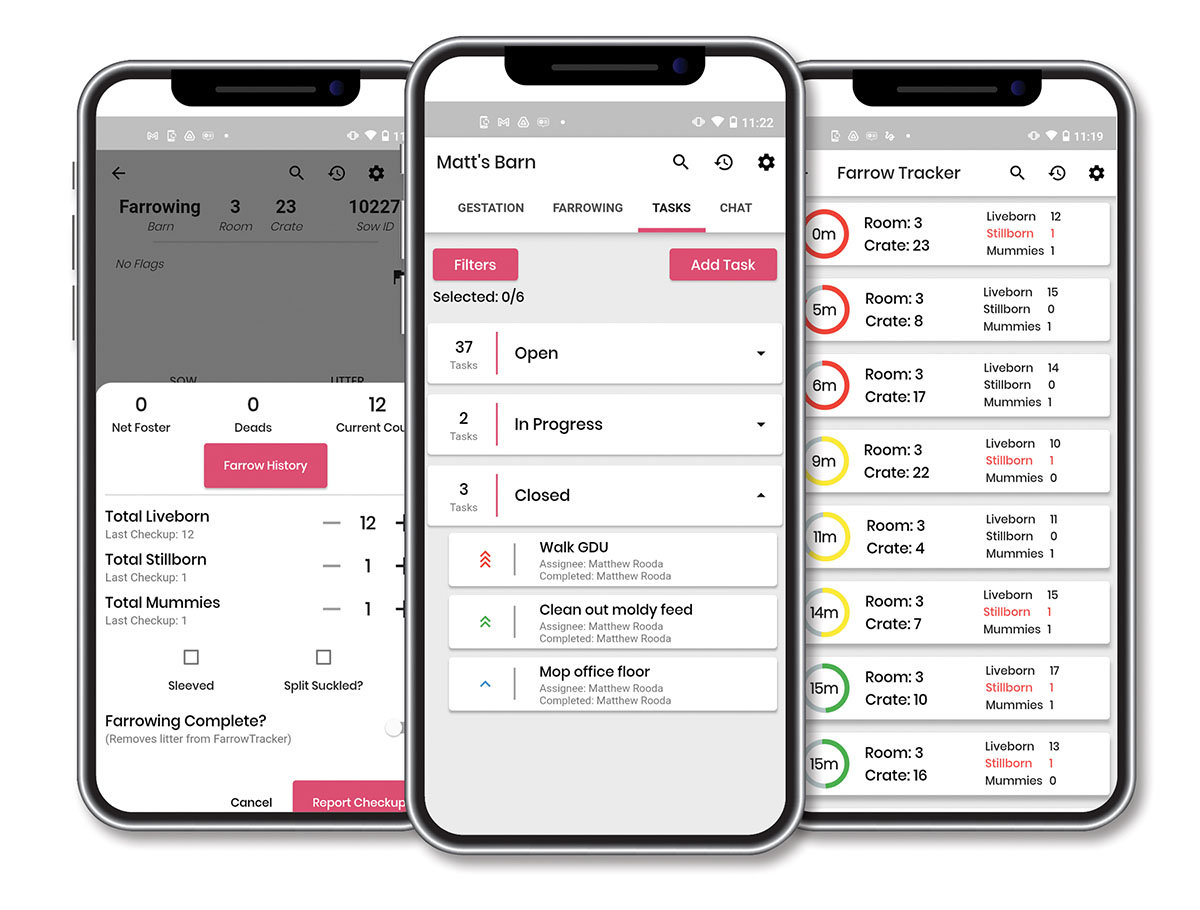
In 2020, PigFlow, a workforce and swine management platform, was developed. PigFlow helps pork producers maximize their potential by bringing greater workplace efficiencies, process compliance, and animal care to the swine industry.
PigFlow assists teams to better plan, execute, and succeed by autonomously generating and organizing daily tasks, streamlining organizational communication, and alerting team members when there is an issue, such as an animal that is in need of timely care.
Although a novel approach to the swine industry, PigFlow was inspired by Matthew Rooda’s background in healthcare and the many patient management solutions that exist to help nurses and doctors provide a higher quality of care. PigFlow’s rapid growth, passionate testimonials, and industry awards speak to its unique impact on daily operations.
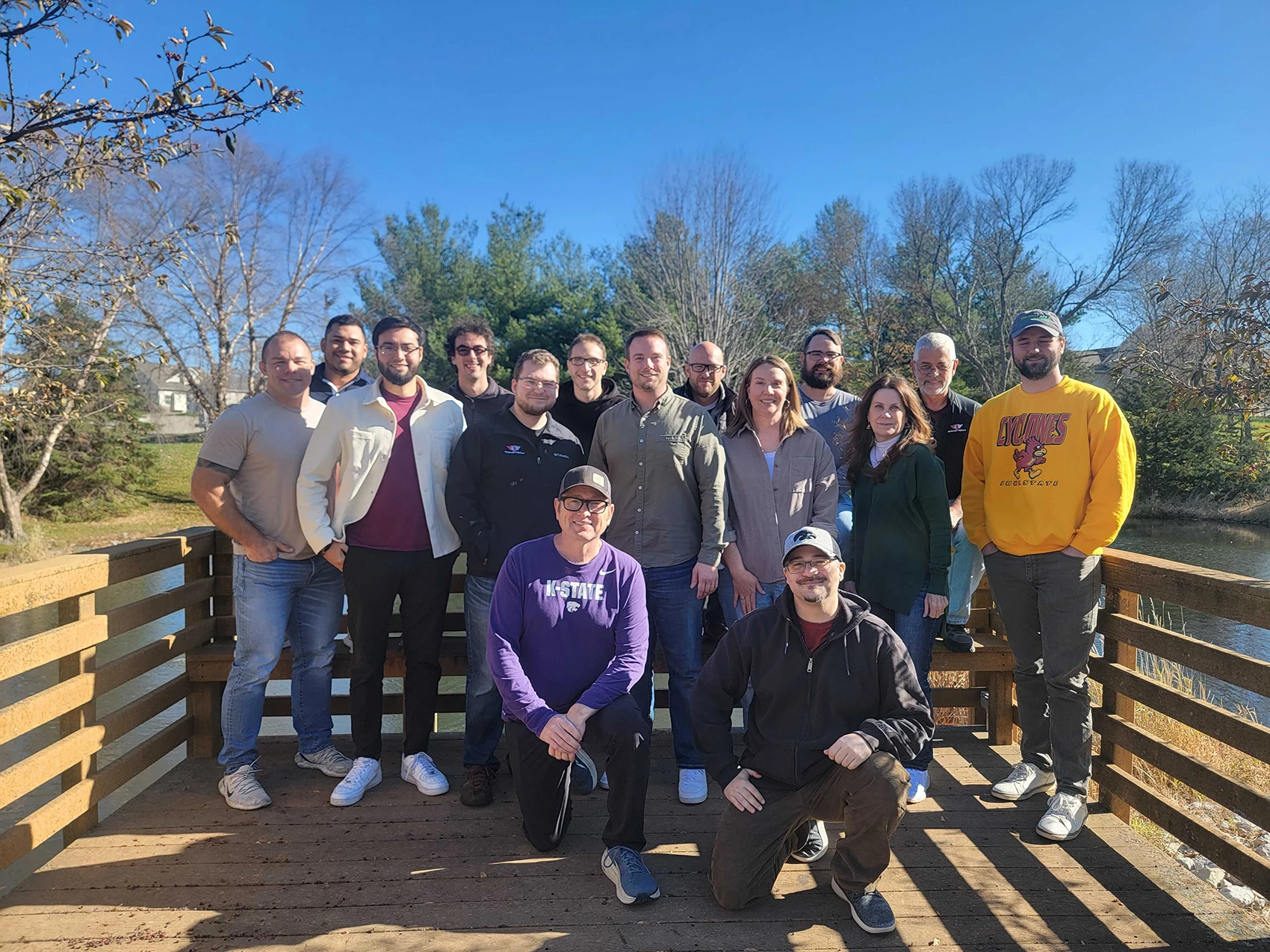
The change that we are bringing to animal agriculture is a team effort. SwineTech’s mission could not be possible without the many team members, investors, producers, partners, and mentors that have supported us along the way.
Please reach out today if you are interested in learning more.